The Swing
c. 1767–1768
DESCRIPTION
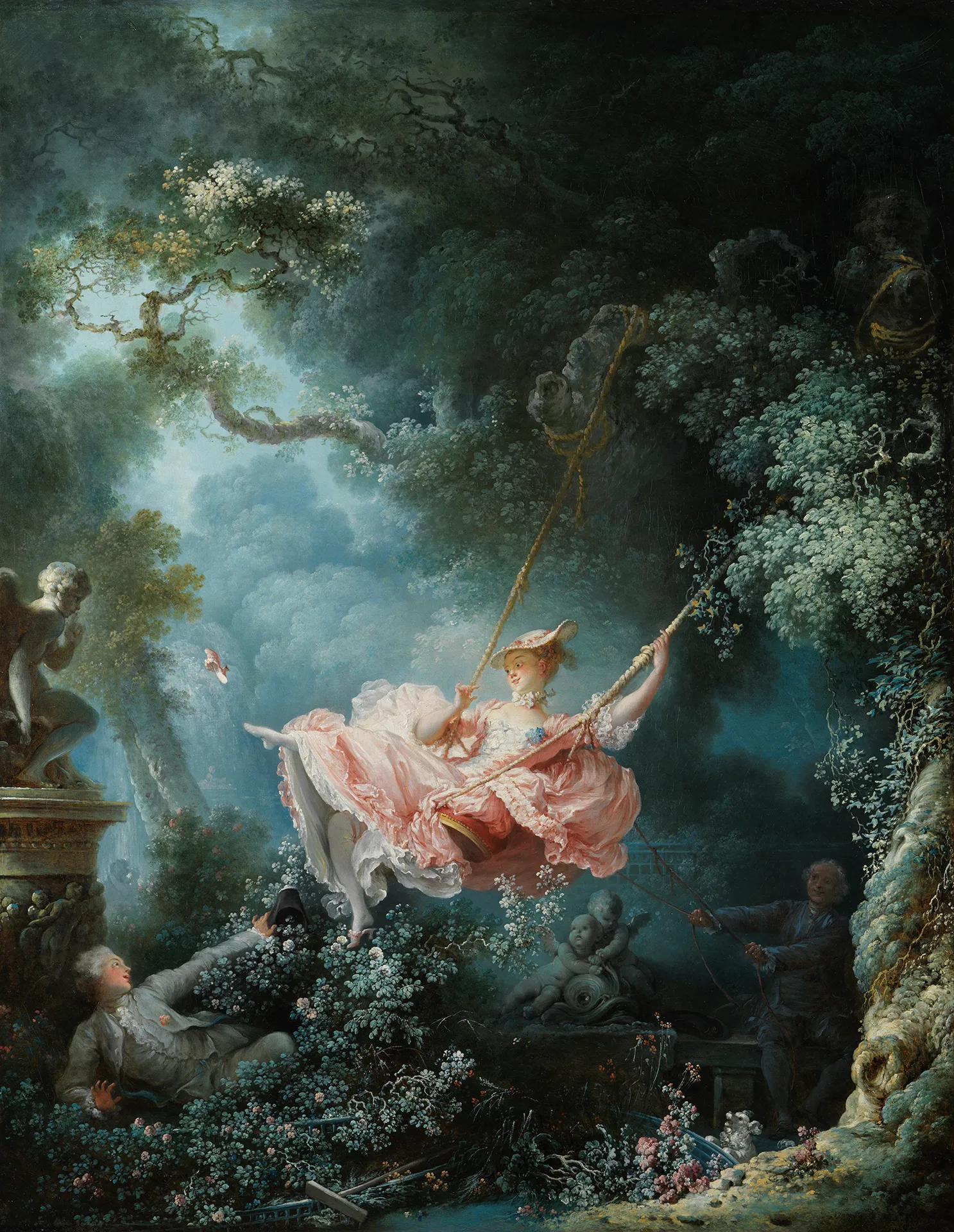
The Swing (French: L'Escarpolette), also known as The Happy Accidents of the Swing (French: Les Hasards heureux de l'escarpolette, the original title), is an 18th-century oil painting by Jean-Honoré Fragonard in the Wallace Collection in London. It is considered to be one of the masterpieces of the Rococo era, and is Fragonard's best-known work. The painting depicts an elegantly dressed young woman on a swing. A smiling young man, hiding in the bushes below and to the left, points towards her billowing dress with hat in hand. A smiling older man, who is nearly hidden in the shadows on the right, propels the swing with a pair of ropes, as a small white dog barks nearby. The lady is wearing a bergère hat (shepherdess hat), as she flings her shoe with an outstretched left foot. Two statues are present, one of a putto, who watches from above the young man on the left with its finger in front of its lips, the other of two putti is on the right beside the older man. According to the memoirs of the dramatist Charles Collé, a courtier (homme de la cour) first asked Gabriel François Doyen to make this painting of him and his mistress. Not comfortable with this frivolous work, Doyen refused and passed on the commission to Fragonard. The man had requested a portrait of his mistress seated on a swing being pushed by a bishop, but Fragonard painted a layman. This style of "frivolous" painting soon became the target of the philosophers of the Enlightenment, who demanded a more serious art which would show the nobility of humanity.
DETAILS
Original title: Les Hasards heureux de l'escarpolette (French)
Dimensions: W64.2cm x H81cm
Movement(s): Rococo
Medium(s): Oil on canvas
Genre(s): Figure painting
MUSEUM