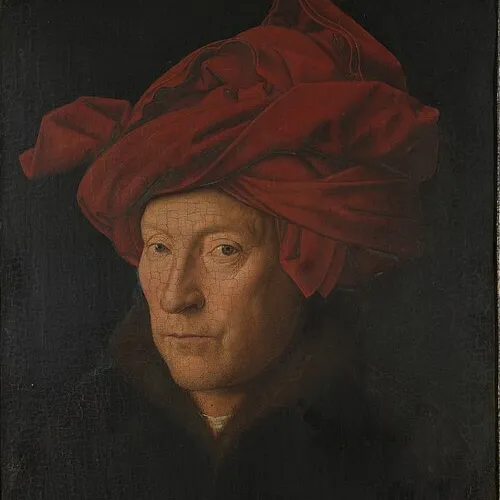
Portrait of a Man in a Red Turban
1433
DESCRIPTION
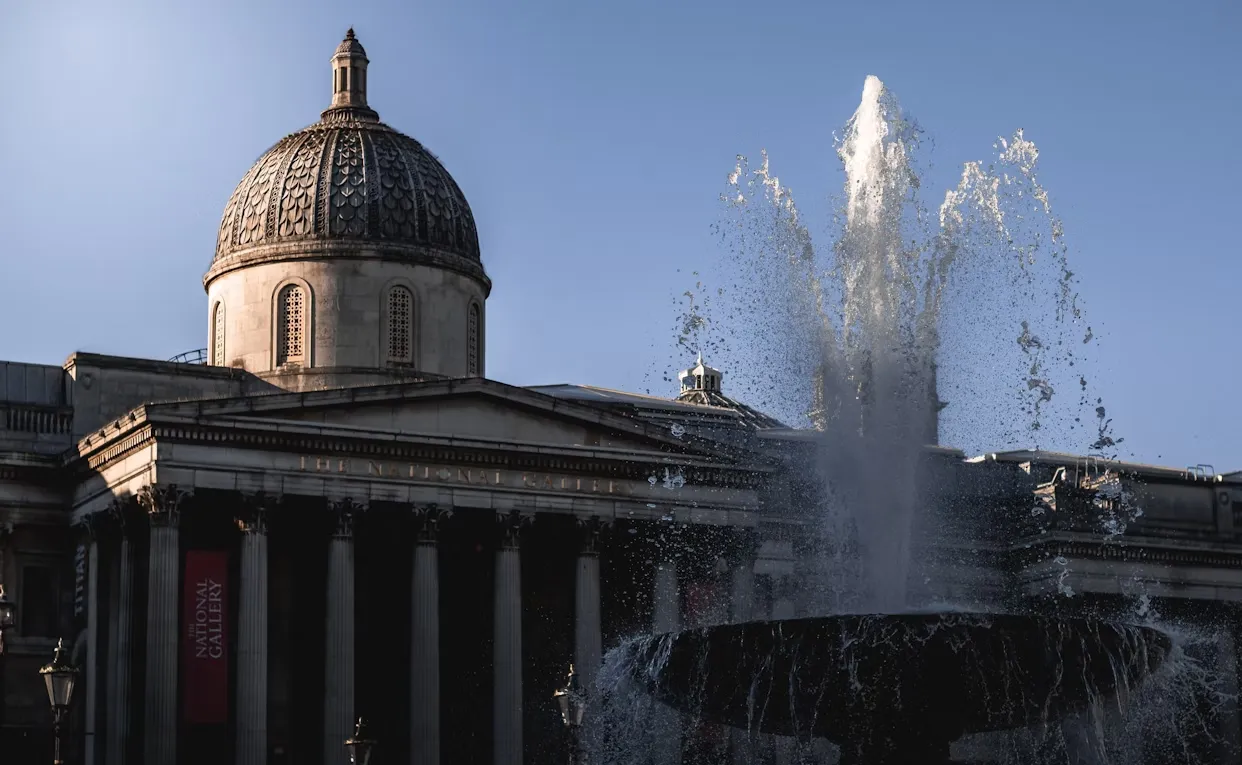
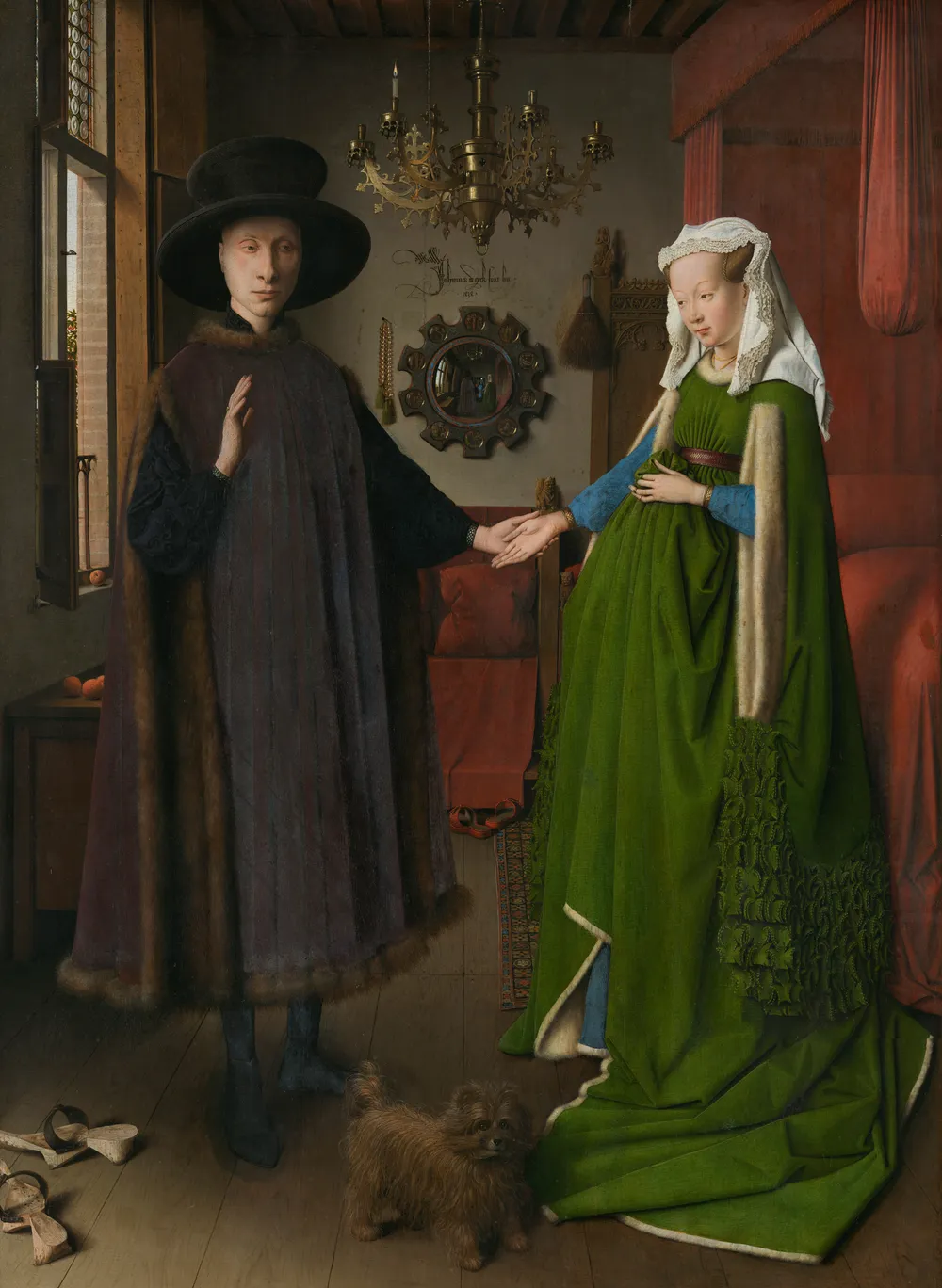
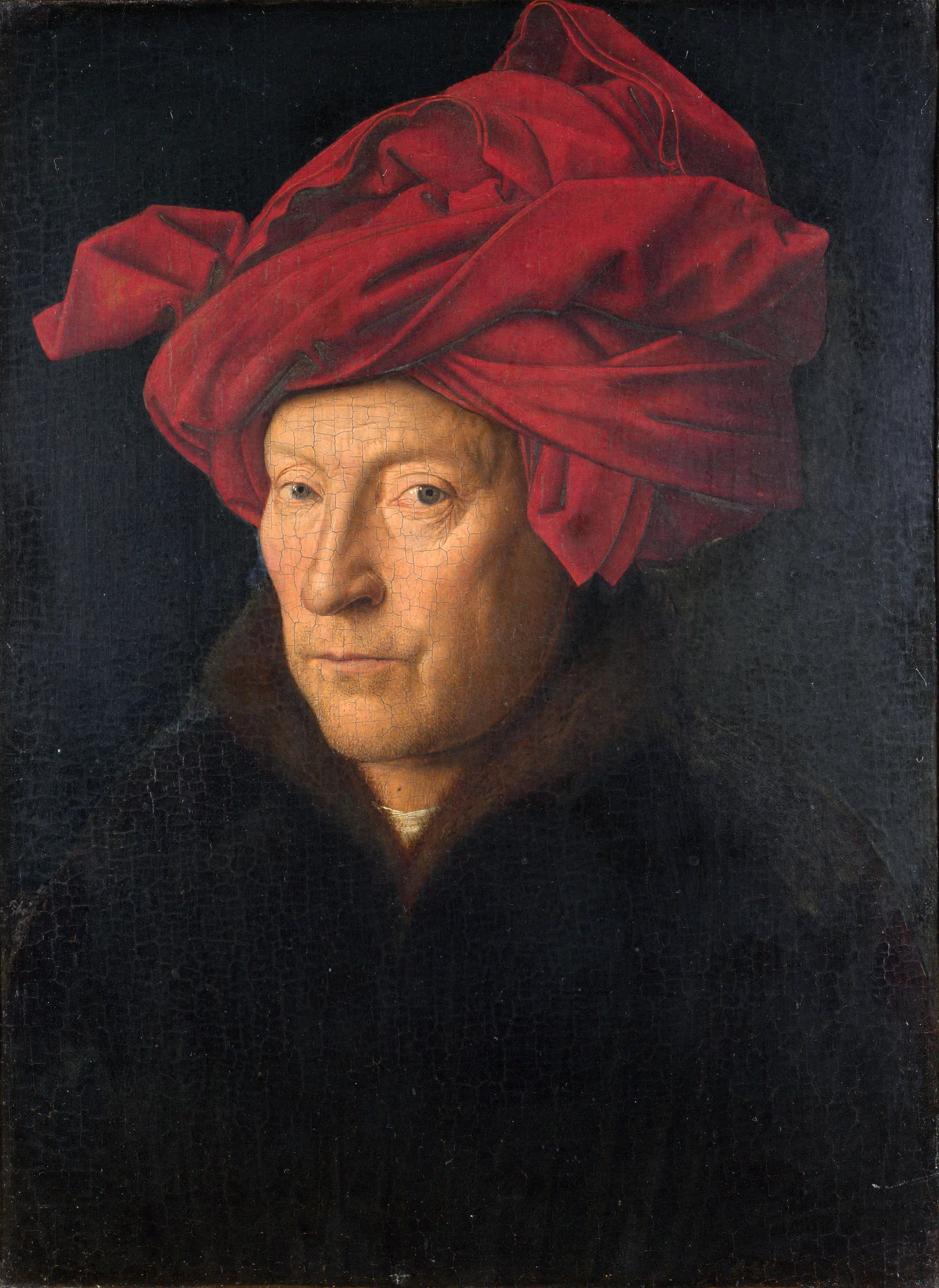
Portrait of a Man (Self Portrait?) (earlier Portrait of a Man in a Red Turban) is the title given to a small oil painting by the Early Netherlandish painter Jan van Eyck, completed in 1433 in Bruges. The inscription at the top of the frame, which is original, contains his motto Als Ich Can (intended as the pun "as I/Eyck can", perhaps implying "as only I, van Eyck, can") was a common autograph for van Eyck. However this is his first known usage of the term, and it is unusually large and prominent. This and the sitter's unusually direct and confrontational gaze have been taken as an indication that the work is a self-portrait. The panel is possibly the pendant to van Eyck's portrait of his wife in Bruges, although her portrait is dated 1439 and is larger. It has been proposed that he created his self-portrait to keep at his workshop so that he could use it to display his abilities (and social status, given the fine clothes evident in the portrait) to potential clients. However, in 1433, his reputation was such that he was already highly sought after for commissioned work and hardly needed to advertise. The panel has been in the National Gallery, London, since 1851, where it hangs alongside his Arnolfini Portrait (1434) and Léal Souvenir (1432). The panel has been in England since its acquisition by Thomas Howard, 14th Earl of Arundel, probably during his exile in Antwerp from 1642 to 1644.
DETAILS
Original title: Portret van een man met rode tulband (Dutch)
Dimensions: W19cm x H25.5cm
Movement(s): Northern Renaissance
Medium(s): Oil on oak panel
Genre(s): Autoportrait
MUSEUM